REFCOM F-Gas registered
Registration REF1022593.

Services
Qualified refrigeration engineers for leak checks, precise repairs and compliance records.
01 · Refrigeration
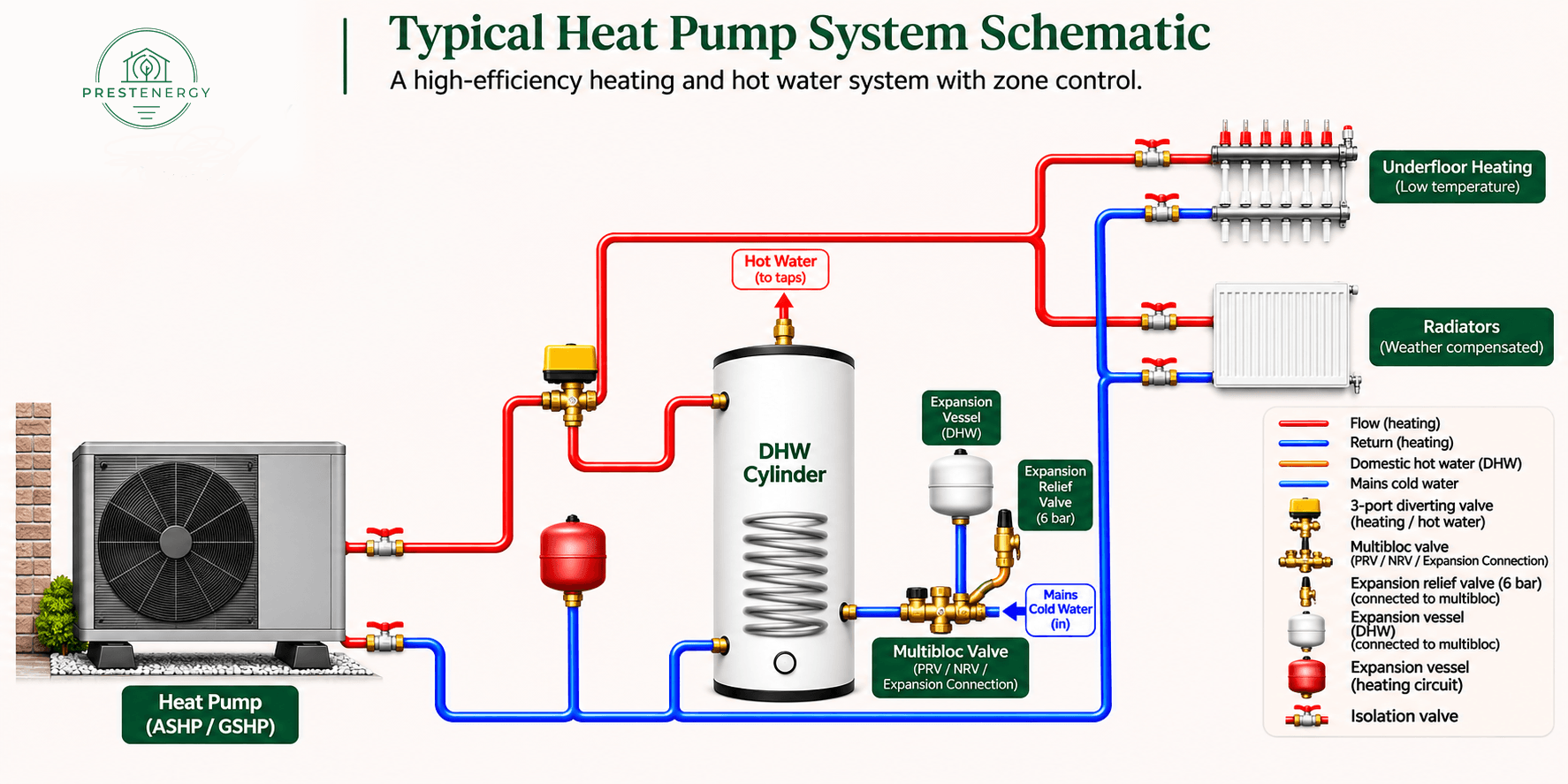
A heat pump works by moving refrigerant around a sealed circuit: compressing it, condensing it, expanding it and evaporating it again. That circuit is what collects heat from outside and delivers it to your home.
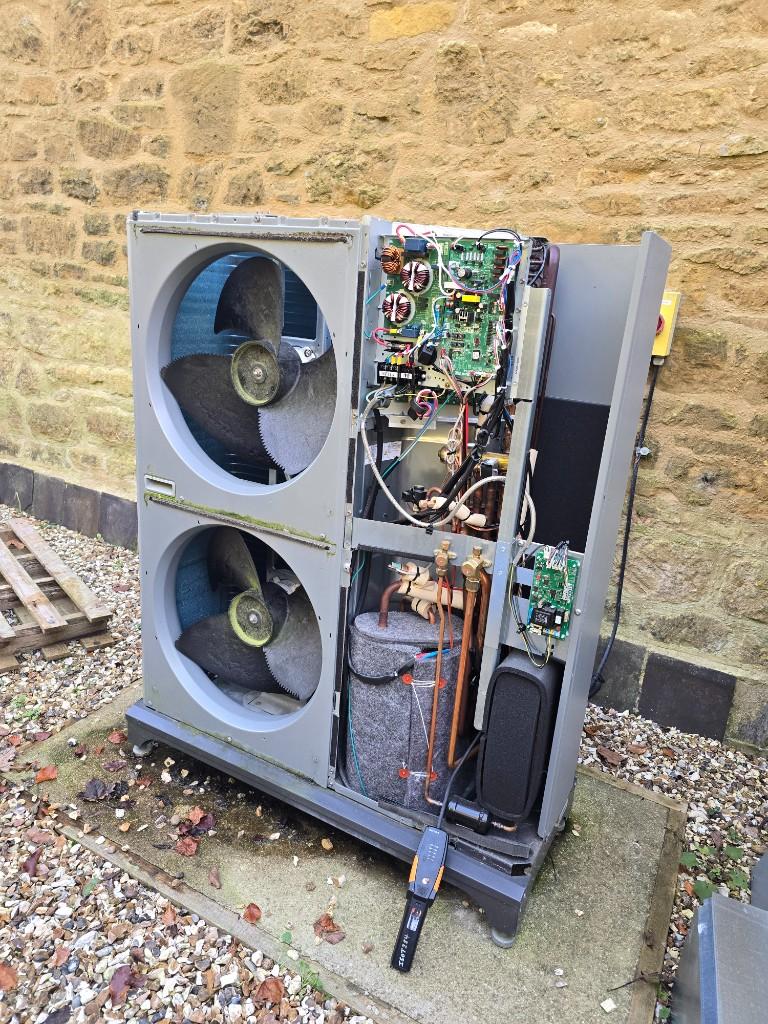
Diagnosing and repairing it needs refrigeration knowledge, specialist equipment and, for fluorinated refrigerants, F-Gas certification. It isn't work a general heating engineer is qualified to do.
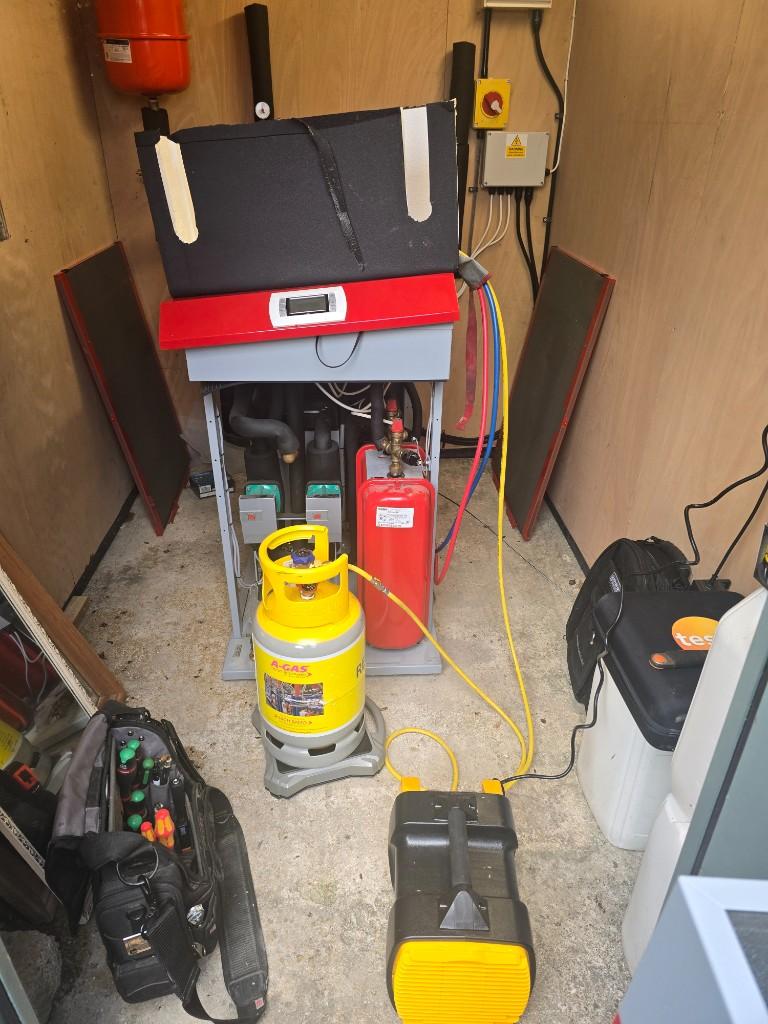
Our engineers are refrigeration trained and Prestenergy is REFCOM F-Gas registered (REF1022593). We find leaks rather than topping systems up, recharge by weight, and record every piece of refrigerant work.
Refrigeration engineers, not just heating engineers.
Registration REF1022593.
We fix the cause before recharging.
Including R290 (propane) systems.
Documented for audits and handovers.
02 · The refrigerant circuit
Refrigerant circulates through four main components, changing between liquid and vapour as it collects heat from outside and releases it into your home. Select a stage to learn more.
03 · What we do
04 · Refrigerants
A2L · mildly flammable
The most common refrigerant in modern air source heat pumps. Efficient, with a much lower climate impact than R410A.
A1 · non-flammable
Widely used in older heat pumps. Runs at high pressures and is being phased down under F-Gas rules.
A1 · non-flammable
A blend found in many older heat pumps. It has to be charged as a liquid so the blend stays in the right proportions.
A1 · non-flammable
Found in some ground source and high-temperature heat pumps, and in hot water heat pumps.
A3 · flammable
Propane, a natural refrigerant with a very low climate impact. Its flammability means it needs specific training, tools and care.
GWP is global warming potential compared with carbon dioxide (AR4 values, as used for UK F-Gas reporting).
Refrigerant fault or leak?
Tell us the make, model and what's happening, and we'll get back to you to arrange a visit.
A heat pump works by moving refrigerant around a sealed circuit. Diagnosing and repairing that circuit needs refrigeration knowledge, specialist tools and, for fluorinated refrigerants, F-Gas certification. It isn't work a general heating engineer is qualified to do.
F-Gas certification shows that engineers and the company are qualified to work on systems containing fluorinated refrigerants. Prestenergy is F-Gas certified through REFCOM (REF1022593).
We work with the refrigerants used in modern heat pumps, including R32, R410A and R134a, and natural refrigerants such as R290 (propane), which needs extra care because it is flammable.
A loss of refrigerant reduces efficiency and output and can lead to faults or damage. The leak must be found and repaired before the system is recharged. Simply topping it up isn't the right fix.
It depends on the type and amount of refrigerant. Larger systems have legal leak-checking requirements, while many domestic heat pumps fall below the threshold. We'll tell you what applies to your system and include leak checks in our servicing.
Yes. We provide documented records of refrigerant work, leak checks and servicing, ready for audits, compliance and property handovers.